UK Free Horse Racing Betting and Live Odds Comparison
 Available in US
Bookmaker maths, regulator data, zero fluff.
An editorial, data-driven breakdown of UK free horse racing betting for 2026: bookmaker maths, UKGC rules, Levy economics, festival strategy and the black-market picture behind every free bet offer.
Remote gross gambling yield on British horse racing hit £766.7 million in the last reported year, and turnover on the sport still fell by 4.2 percent. That contradiction is the whole story of UK free horse racing betting in 2026 — the market is still enormous, but it is bleeding customers, and every welcome offer, Extra Places promo and Best Odds Guaranteed promise you see on a bookmaker’s homepage is a lever being pulled to win them back.
I have spent seven years covering UK and Irish form, bookmaker promotions and Levy-driven market economics. This is not an affiliate round-up dressed up as advice — it is an editorial walk-through of how the British racing betting market actually works, with the numbers from the Gambling Commission, the BHA and the Horserace Betting Levy Board sitting inside the sentences. Seven percent of British adults had a bet on racing in the four weeks before the Gambling Commission’s most recent Wave 2 survey — if you are one of them, what follows is for you.
Market size
£766.7m remote GGY on racing, inside a £15.6bn regulated gambling industry.
Licensed operators
3,086 active Gambling Commission licences as of 31 March 2025.
Free bet reality
Stake-not-returned is the default — you win the profit, not the token back.
Key dates
Cheltenham Festival in March, Grand National in April, Royal Ascot in June.
The one rule
A free bet at a bad price is worse than a qualifying bet at a fair one.
Table of Contents
- Comparing UK Horse Racing Free Bets and Market Odds
- What a free bet actually is, and what it is not
- How a Bet 10 Get 30 offer actually works, step by step
- Why the UKGC licence is the first thing I check
- The UK racing betting market in 2026, in numbers
- The maths a bookmaker does not want you to do
- Festivals, Extra Places and where free bets earn their keep
- The Levy loop: why bookmakers can afford to give you free bets
- Affordability checks, the black market and the safety of your free bet
- A working punter’s checklist for free bets in 2026
- Questions I get asked every week
- What the 2026 season asks of the thinking punter
Comparing UK Horse Racing Free Bets and Market Odds
- A free bet is not free money. With stake-not-returned tokens — the UK default — a £10 free bet at 5.0 returns £40 in profit, not £50. The stake vanishes with the settlement.
- The Gambling Commission licence is the non-negotiable. UK traffic to 22 unlicensed sites taking bets on British racing jumped 522 percent between August 2021 and September 2024 — that is the market your free bet is competing with for your attention.
- Overround is where value is won or lost. Fixed-odds books run at 110–130 percent on most races; Betfair Exchange sits at 102–105 percent. Your free bet token only earns real value at a fair price.
- The Levy is why free bets exist. £108.9 million flowed from bookmakers into British racing through the statutory levy in 2024-25 — the highest post-reform total on record, and the reason operators can afford to seed the market with welcome offers.
- The calendar does the heavy lifting. Cheltenham, the Grand National and Royal Ascot are when Extra Places, Best Odds Guaranteed and enhanced welcome terms actually move the needle — use free bets on big fields, not on Tuesday night all-weather.
What a free bet actually is, and what it is not
The first free bet I ever placed was at Cheltenham in 2019. I backed a 9/2 shot, it won, and I went to the cashier expecting £55. I got £45. That £10 gap — the returned stake I assumed I was getting — is the single most expensive lesson in British punting, and almost every welcome-offer page glides over it with the word “free” as if it meant what it means anywhere else in English.
It does not. In UK horse racing betting, a free bet is a contractual product with three dominant formats, and the difference between them decides what your token is worth.
The three formats you will meet
The stake-returned free bet acts like cash — profit and original stake are both credited on a win. These are rare on welcome offers in 2026, surfacing mostly on reload promotions. I treat them as roughly 25 percent more valuable than a same-size stake-not-returned token at the same price.
The stake-not-returned free bet, or SNR, accounts for the vast majority of welcome tokens. The token vanishes when the bet settles — only profit is paid. This is what operators mean nine times out of ten when they say “free bet” on a banner.
The risk-free bet is the recent arrival. You place a qualifying bet with your own money; if it loses, you get the stake back as a free bet token — usually SNR. The name is marketing. You are one-step-removed-from-risk, and only if you then use the refunded token profitably.
SNR — Stake Not Returned. The UK default for free bets. When the token wins, only profit is paid.
BOG — Best Odds Guaranteed. If the price you took is shorter than the Starting Price, the bookmaker pays the bigger of the two.
NRNB — Non-Runner No Bet. On flagged ante-post markets, if your horse does not run, your stake is returned rather than lost.
A £10 SNR token placed at 5.0 returns £40, not £50. The effective value is four units of stake, not five. At 2.0 the token returns £10 rather than £20. At longer prices the relative hit shrinks. This is why experienced punters aim SNR tokens at middle-to-longer prices — the ratio of payout to face value improves the further out you go.
Grainne Hurst of the Betting and Gaming Council has been blunt about where this product lives: balanced regulations are the best defence against the black market, where parasite operators “don’t pay tax, don’t care about safer gambling, and do not contribute a penny to the levy.” Unlicensed sites advertise bigger face-value bonuses and may not pay you out at all.
When you read “Bet £10 Get £30” on a UK bookmaker’s page, the £30 is almost certainly three SNR tokens of £10, and the real purchasing power is £18 to £25 depending on the prices you pick. The detailed wagering mechanics sit in the next section. Here, I am drawing the map.
How a Bet 10 Get 30 offer actually works, step by step
Here is a question I ask anyone who tells me they have “used” a welcome offer: which part of the £30 did you actually place on a race you had an opinion on? Eight times out of ten the answer is a hesitant “well, I did the qualifying bit and then I stuck the tokens on the favourite at Kempton.” That is how operators get paid to give away free bets.
Let us walk through a generic “Bet £10 Get £30” welcome offer — the dominant format in UK horse racing betting in 2026.
The five gates of a welcome offer
Gate one: the qualifying bet. You deposit — usually £10 minimum — and place a single qualifying bet of at least £10 at minimum odds of 1.5. Odds-on shots under 1.5 do not count. This is the most common reason punters think they have used an offer and then cannot find their tokens the next morning.
Gate two: settlement. The qualifying bet has to settle before free bets are credited. Void bets and partial cash-outs usually do not qualify. Each-way bets sometimes only have the win portion count towards the minimum stake.
Gate three: credit. Tokens arrive as three £10 SNR tokens rather than one £30 token — three separate bets on three separate markets, three chances for the operator to win the tokens back.
Gate four: expiry. Most UK racing tokens expire in 7 days. Some stretch to 30. A few aggressive sign-ups shorten to 48 or 72 hours. Miss the window and they vanish.
Gate five: exclusions. Virtual racing rarely counts. Tote pools usually do not. Some operators exclude in-play. Payment-method exclusions are the sharpest trap — Skrill and Neteller deposits are routinely locked out, buried four or five clauses deep.
Three token strategies, same £30 of free bets
Scenario A: three tokens on 2.0 favourites. Expected value: roughly £4.
Scenario B: three tokens on 5.0 each-way shots with Extra Places. Expected value: roughly £8–£10.
Scenario C: three tokens on 8.0 outsiders in big handicaps. Expected value: roughly £9–£11, with higher variance.
Sky Bet paid out more than £10 million in Extra Places during Cheltenham this year. bet365 paid out more than £50 million in Best Odds Guaranteed improvements over the same period. The operators running these promotions hardest are the ones betting most heavily on retention.
On handicaps with 16+ runners, the standard each-way structure is 4 places at 1/4 odds. Extra Places promotions stretch that to 5, 6, 7 or 8 places. A 20-runner Cheltenham handicap with 8 Extra Places against a standard 4-place rival is a meaningfully different bet.
Before you click “place bet” on a welcome offer
- Minimum odds — is your selection at 1.5 or longer?
- Expiry — when do the tokens vanish? Put it in your calendar.
- Market exclusions — virtual racing, Tote, in-play?
- Maximum stake per token — some offers cap at face value, others let you top up.
- Minimum deposit — matches or exceeds your qualifying stake in most cases.
- Qualifying winnings — can you withdraw them immediately?
- Payment method — avoid Skrill and Neteller unless the T&Cs include them.
Every item on that list has cost real money in real accounts, including mine. Treat the offer as a structured product with five gates, clear each deliberately, and the value is there. For detailed wagering rules and specific welcome-offer variants, the UK welcome offer walkthrough picks up where this leaves off.
Why the UKGC licence is the first thing I check
Three thousand and eighty-six. That is the number of active gambling licences in Britain as of 31 March 2025, down 2.3 percent on the year. The reason that number matters is simple: you are looking at a regulated population you can verify, and an unregulated one you cannot. The Gambling Commission is the first filter I run any operator through, and it takes less than a minute.
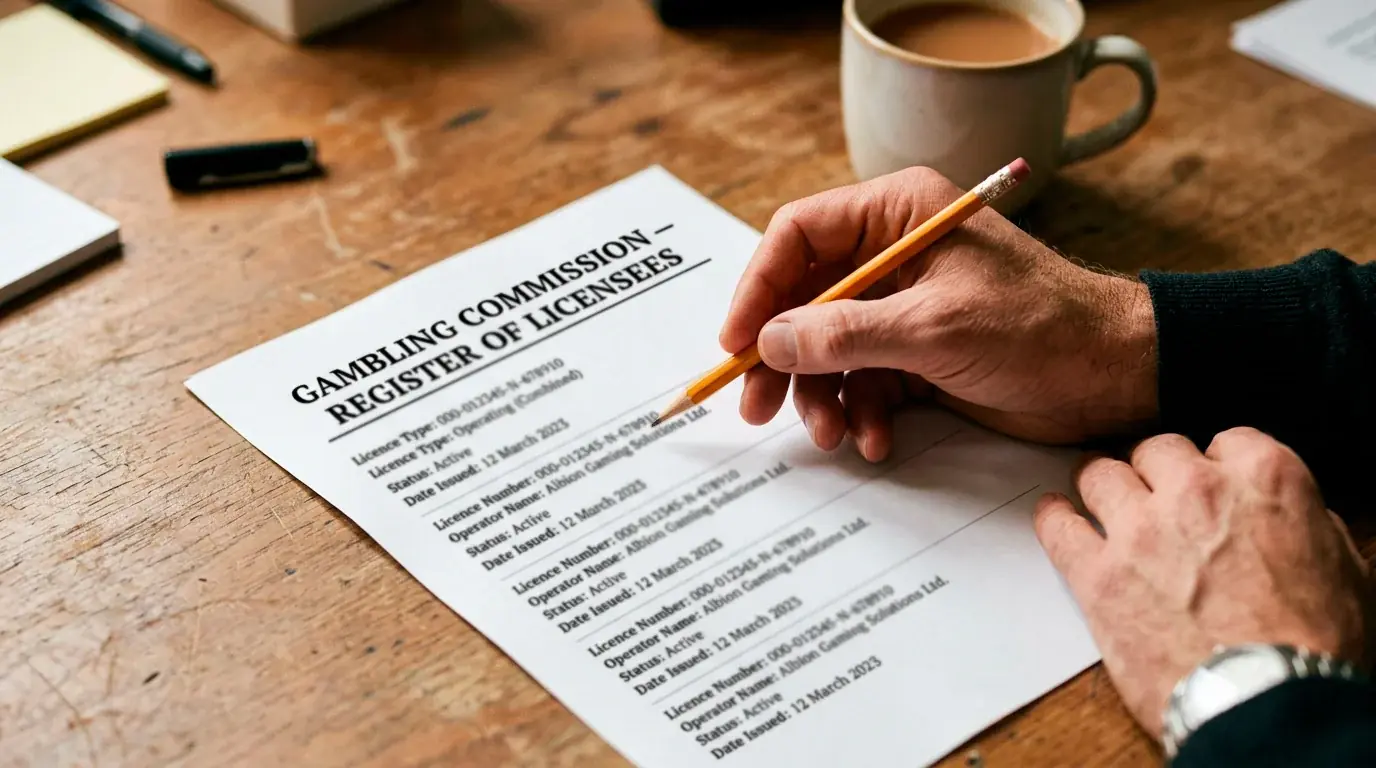
The question: does the licence number on the footer match a record in the Commission’s public Register of Licensees? If yes, you are inside the regulated market. If no — or if the footer says “licensed and regulated” without a number — you are not, no matter how British the branding looks. I have seen operators buy expired .co.uk domains and fill them with UK imagery to game first-time visitors who never cross-check.
What the licence actually buys you
Inside the regulated perimeter there are 24.4 million active customer accounts in the Remote Casino, Betting and Bingo sector as of the last reported quarter. Those accounts come with real protections: dispute resolution through the Independent Betting Adjudication Service, client-money ring-fencing, mandatory responsible gambling tools, and — for free-bet holders — an enforceable obligation to honour advertised promotions.
Outside it, none of the above. Traffic from UK punters to 22 unlicensed sites accepting bets on British racing rose by 522 percent between August 2021 and September 2024. Legal-segment traffic over the same window grew by just 49 percent. Gambling Commission chief executive Andrew Rhodes has described the illegal online market as “unsafe, unfair and criminal.” On those sites, a “free bet” means nothing because nothing is enforceable.
Frontier Economics estimates 1.5 million British adults stake up to £4.3 billion per year through the unlicensed market — £2.7 billion online and up to £1.6 billion offline. That is cash flowing past the regulator, past the Treasury, and past the Horserace Betting Levy. Your protection as a customer on those sites is zero. Your recourse when a “welcome bonus” is withheld is zero.
The 60-second licence check
Scroll to the footer. You want three things: a UK Gambling Commission licence number (typically 8 digits), a link to the Register of Licensees, and the SafeGambling footer mark that licensed operators are required to carry. Then — the step most punters skip — copy the licence number into the Register directly rather than trusting the link on the site. If the number returns a current, active licence in the name of the trading entity, you are clear. If not, close the tab.
The distance between what an unlicensed site looks like and what a regulated one looks like has closed dramatically. Graphics are professional. Language is British. Customer service is responsive — right up until you try to withdraw a free bet win, at which point “verification” quietly absorbs your balance. A working knowledge of which UK horse racing bookmakers are worth your time starts with the licence check and works outwards.
The UK racing betting market in 2026, in numbers
If you are wondering why every racing bookmaker seems to be running a different flavour of welcome offer at once, the answer lives in a single chart nobody shows you. British racing in 2026 is a £766.7 million remote GGY market sitting inside a £15.6 billion regulated gambling industry — and it is shrinking, slowly but unmistakably, against a football book almost twice its size and a casino product bigger still.
£766.7 million
Remote GGY on British horse racing, 2024-25. Roughly 7 percent of the entire UK online gambling market, and down 4.2 percent year on year on turnover.
The side-by-side: remote betting overall generated £2.6 billion in GGY for the reported year. Football took £1.3 billion, racing £766.7 million. The full regulated industry — casino, bingo, lotteries, the lot — generated £15.6 billion, up 3.5 percent on the prior year and 10.2 percent on 2019-20. Racing is not the biggest slice. It is not the fastest-growing slice either. But it is the slice with the deepest cultural roots in Britain, and the only one with a statutory mechanism for recycling gambling profit back into the sport itself. We will get to that mechanism — the Horserace Betting Levy — in a few sections.
Three structures, three approaches to a free bet
British racing trading runs on three distinct structures, and they do not behave the same way.
| Feature | Fixed-odds bookmaker | Betting exchange | Tote pools |
|---|---|---|---|
| Typical overround | 110–130 percent | 102–105 percent plus commission | Variable, determined by pool |
| Liquidity | High on majors, thin on low-grade cards | High on popular markets, patchy on small meetings | Concentrated on Placepot and Jackpot markets |
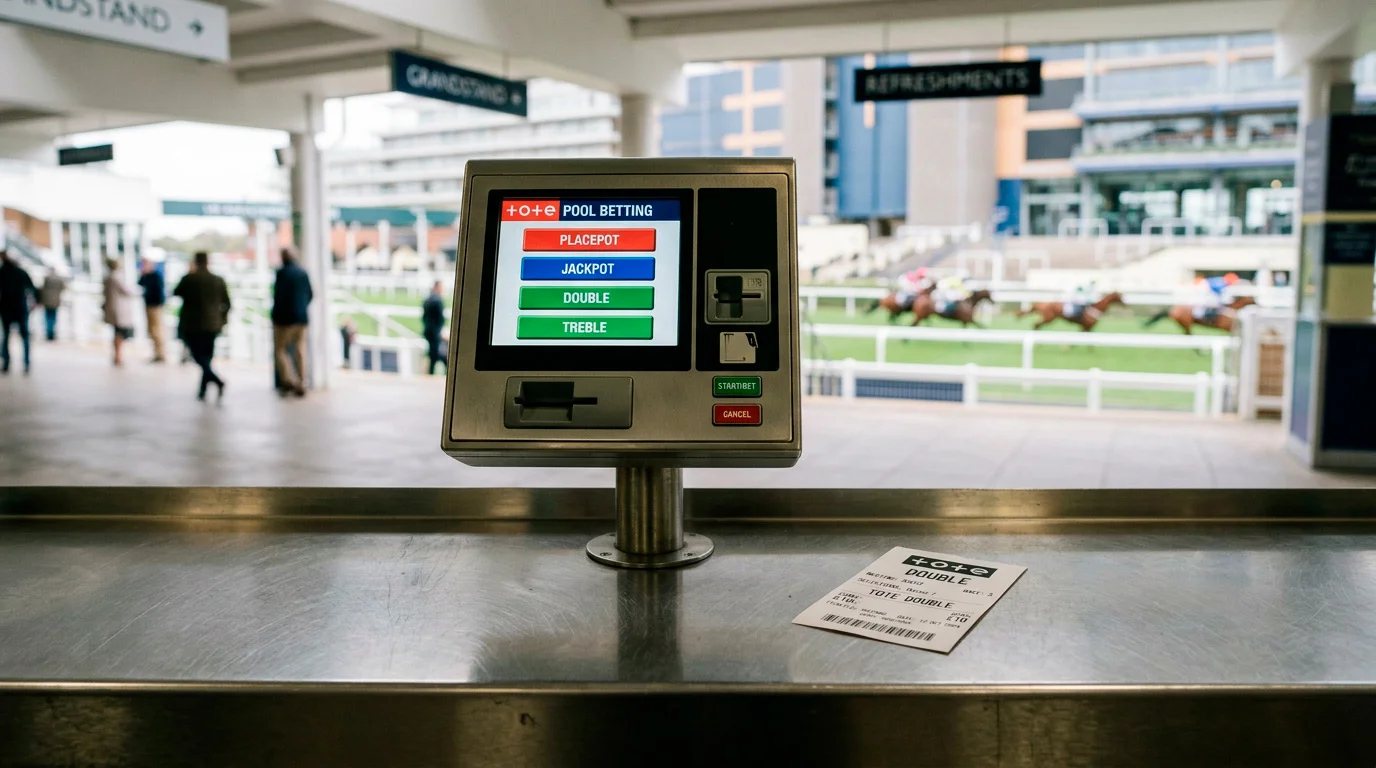
| Free bet applicability | Core use-case, tokens designed for fixed-odds | Rarely applicable to traditional free bets | Typically excluded from welcome offers |
| Typical commission | None — margin baked into odds | 2–5 percent on net winnings per market | Takeout on the pool before returns |
| Best for | Welcome offers, BOG, Extra Places, casual play | Value-seeking, larger stakes, price-sensitive | Big-field exotic bets, low-stake pool play |
The practical implication: your free bet token is almost always a fixed-odds product. It cannot be placed on the exchange in most cases, and it is usually excluded from Tote pools. Operators want your free bet on their price, in their book, because their price has the overround baked in.
Total turnover on British racing in the first three quarters of 2025 was 4.2 percent below the same period in 2024 and 12.8 percent below 2023. Richard Wayman, the BHA’s director of racing, put it directly: total betting turnover had fallen by nine percent against the same period in 2024, and while work was needed on the racing product, a wider range of factors was contributing. Fewer bets, more cautious, on a smaller set of races. When margins compress, retention tools like free bets do not shrink — they grow. The overround maths is why.
The maths a bookmaker does not want you to do
Pull up the ante-post market for next year’s Grand National on any UK bookmaker’s site and add up the implied probabilities across every runner. You will land somewhere close to 180 percent. That is not a typo — the market is telling you, in the language of maths, that the bookmaker thinks the field contains 180 percent of a full race. The extra 80 percent is the margin, the overround, and the single most important number in horse racing betting that nobody prints on the coupon.
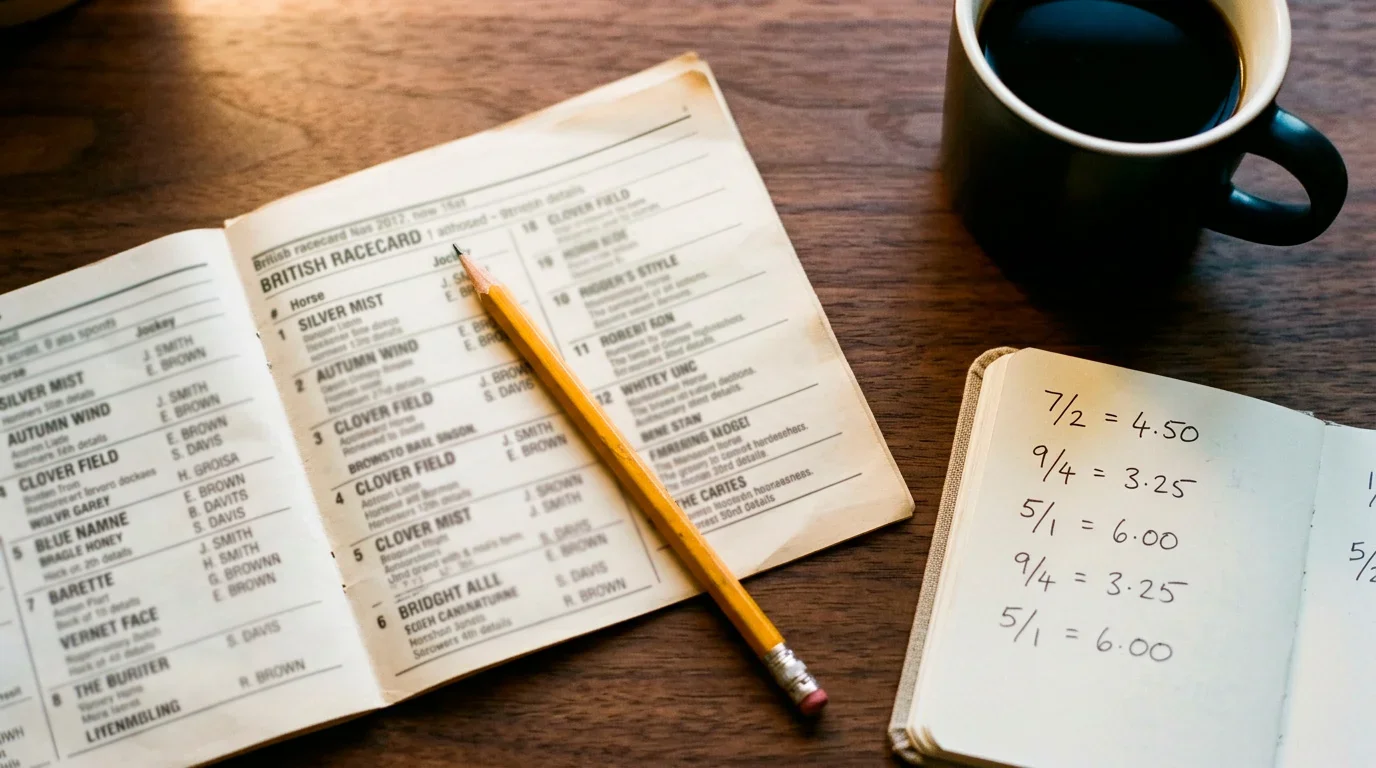
For a standard UK race the overround sits between 110 and 130 percent. Shorter fields run lower, big handicaps run higher, ante-post runs highest of all — for a race as chaotic as the Grand National, where 40 runners go off in April and the ante-post market opens nine months earlier, the figure creeps to 180. The Betfair Exchange runs at 102 to 105 percent, with commission on net winnings replacing the baked-in margin. That gap is where your free bet either earns real value or quietly erodes it.
How implied probability works, by hand
The arithmetic is simple enough to do on the back of a betting slip. For decimal odds, implied probability equals 1 divided by the decimal price. A 3.5 shot has an implied probability of 1/3.5 = 28.6 percent. A 5.0 shot has 20 percent. A 10.0 shot has 10 percent. Add the implied probabilities of every runner in a race, multiply by 100, and you have the overround. If it sums to 115 percent, the margin is 15 percent — the bookmaker’s edge over a fair market.
Worked example — Cheltenham favourite, fixed-odds vs exchange
A handicap favourite is quoted at 3.5 with a bookmaker and 3.65 on the Betfair Exchange.
Implied probability: 1 / 3.5 = 28.6 percent versus 1 / 3.65 = 27.4 percent.
A £10 cash stake at 3.5 wins £25 profit. At 3.65 it wins £26.50 before 5 percent commission — roughly £25.18. Scale it across 100 bets a year and the difference compounds.
Apply a £10 SNR free bet at 3.5 and the payout is £25 profit, stake not returned. The token cannot be used on the exchange. You are locked into the higher-margin market by the terms of the product.
Free bet value and price value are not the same thing. A £10 SNR token at 1.8 on an odds-on favourite returns £8 profit. The same token at 5.0 on a mid-priced handicap runner returns £40. Face value identical, actual value delivered five times different. The floor of useful value lives somewhere above 3.0, and it rises from there.
When I have a free bet in my account, the question I ask is not “which horse do I like.” It is “which market gives this token the most useful work to do.” A £10 SNR token is dead weight on an odds-on shot and dead weight on a 100.0 rank outsider. Somewhere between, usually 4.0 to 12.0 on a competitive handicap, is where SNR tokens do their best work.
The exchange-versus-bookmaker choice for cash stakes is a separate calculation, which I have gone into in the breakdown of Betfair Exchange versus traditional bookmakers. For free bets specifically, the bookmaker is usually the only option, and the overround is the cost of playing with house money.
Festivals, Extra Places and where free bets earn their keep
I have a rule for free bets that I treat as close to law: do not burn them on a Wednesday at Wolverhampton. The real returns on a free bet arrive when the fields are big, the promos are stacked, and the operator is trading a market they cannot fully control. That means festivals.
12 million
Britons who bet on the Grand National each year. Roughly 82 percent of those bets are £5 or less, and around 30 percent are first-timers or returnees.
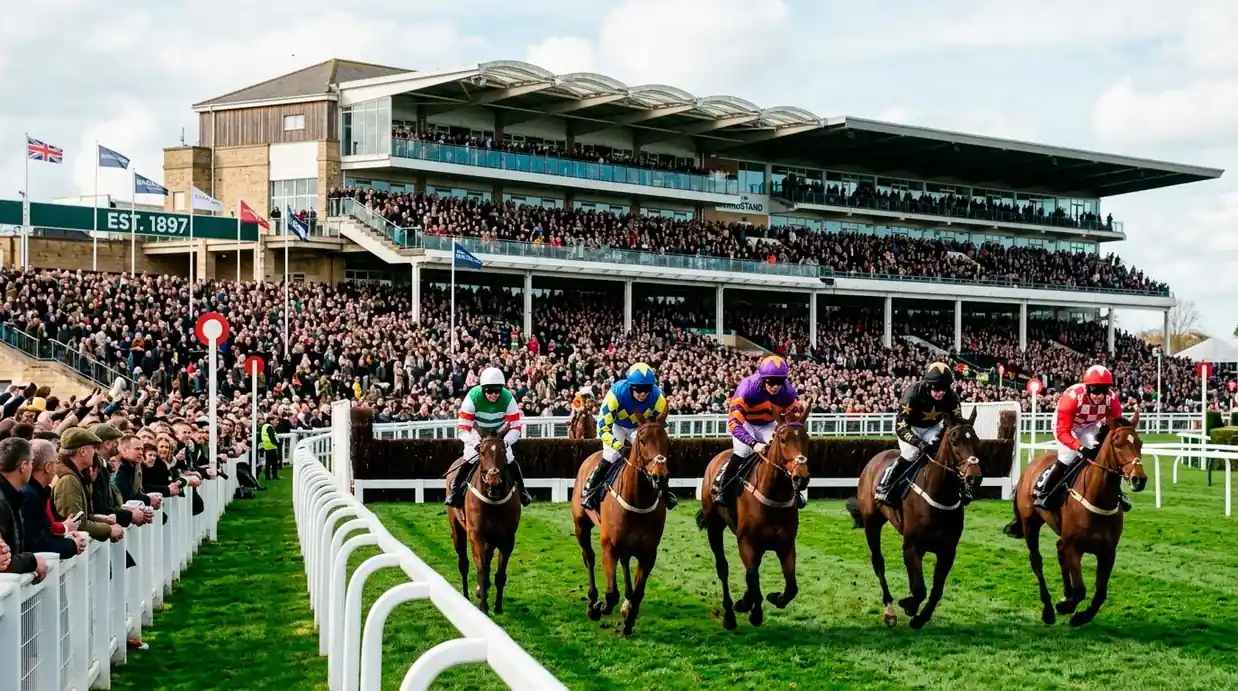
British racing’s festival calendar is unusually concentrated: Cheltenham across four days in March, the Grand National in early April, Royal Ascot across five days in June, and a scatter of premier meetings through spring and summer. Cheltenham alone is projected to attract £450 million across its four days this year. A William Hill trader summed it up: the battle between the book and the punters over those four days is “unrivalled in Jumps racing,” with around £450 million expected to be wagered — the most bet-on racing festival of the year. Every one of the 28 races at the 2025 festival landed inside the top 31 by turnover across the entire UK calendar. The Grand National generates around £250 million on a single race — six or seven times the single-race turnover of the Cheltenham Gold Cup.
How Extra Places actually stretch a free bet
The standard each-way payout on a handicap with 16 or more runners is 4 places at 1/4 odds. Extra Places promos stretch that to 5, 6, 7 or 8 places on the same race, paid at the same 1/4 odds.
The practical effect on your free bet is twofold. First, you are insured against more outcomes: if your horse finishes 6th in a 20-runner Grand National with 6 Extra Places, you still collect the place portion. Second, the insurance changes which horses make sense to back. A 16/1 shot you would not look at under standard 4-place terms becomes defensible at 8-place terms.
Sky Bet paid out more than £10 million in Extra Places improvements at Cheltenham 2026. bet365 paid out more than £50 million through Best Odds Guaranteed across the same festival. The scale tells you why the big books treat festival free bet deployment with engineering precision.
Not every festival race carries Extra Places on every book, and the number of places varies between 5 and 8. Before you commit an each-way free bet, check the individual race terms — a 5-place promo where you expected 7 changes the maths meaningfully. On very large-field races like the Grand National, several operators have moved to 8 places; on smaller festival handicaps, 5 or 6 is typical.
Beyond Extra Places and BOG, three bet types earn their keep with festival free bet tokens. Each-way on big-field handicaps at 8.0 to 20.0 is the classic use. Non-Runner No Bet ante-post markets protect your stake if your horse does not line up, which on a nine-month-out Grand National book — where 15 to 20 percent of entries eventually pull out — is not trivial. Fast-settlement novelty markets on the Grand National itself suit tokens with short expiry clocks.
For a deeper tactical guide to the single biggest race on the calendar — welcome offers that fire around it, ante-post timing, token deployment — the Grand National free bets guide does the heavy lifting. Here, the point is that festivals are where free bets stop being symbolic and start being arithmetic.
The Levy loop: why bookmakers can afford to give you free bets
Here is a question almost nobody asks when they claim a welcome offer: where does the money come from? Bookmakers do not print their own currency. The £30 just credited to your account is an expense on somebody’s books, and the reason that expense is economically sustainable is a piece of mid-twentieth-century legislation that ties punters and prize money together in a statutory loop.
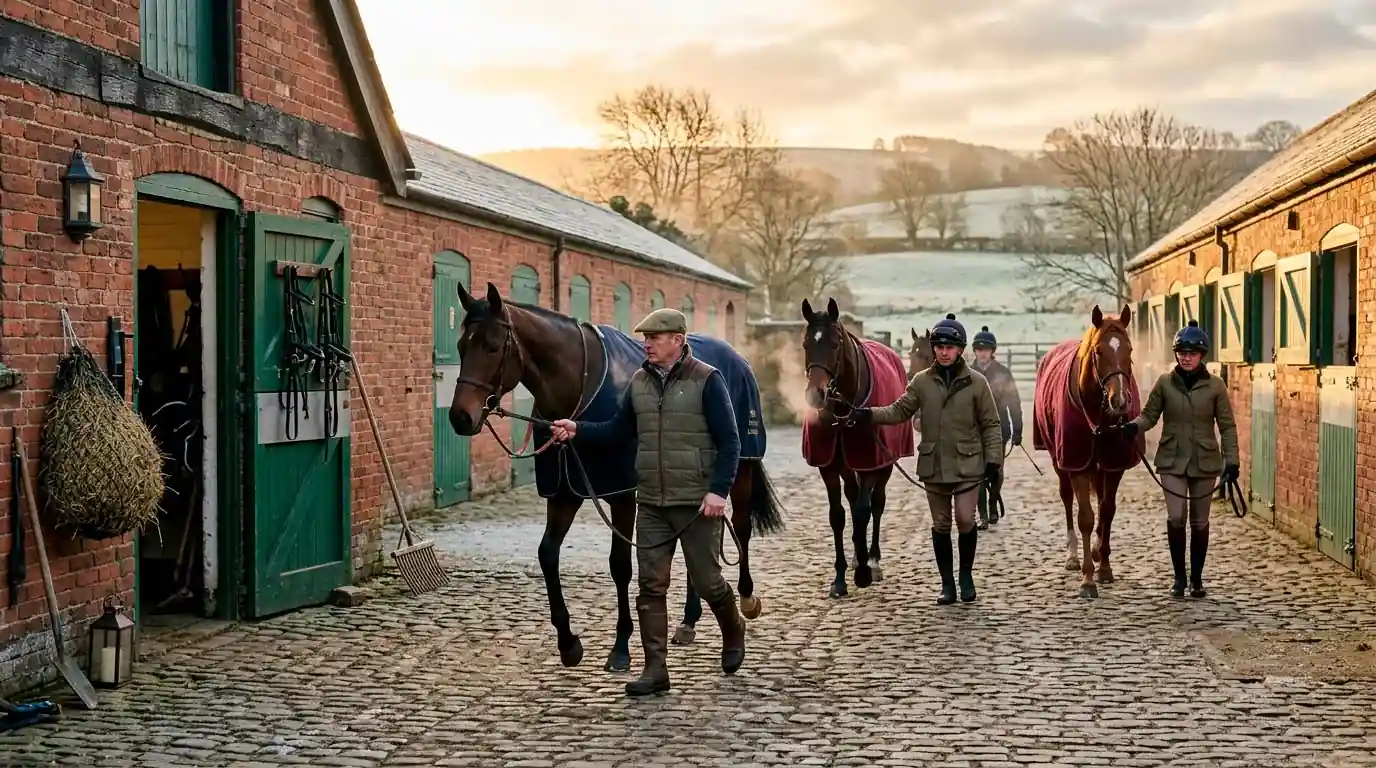
The Horserace Betting Levy works like this: 10 percent of the gross profit UK-licensed bookmakers make on British horse racing is paid to the Horserace Betting Levy Board, which distributes it across prize funds, regulatory integrity and training. In 2024-25 that levy yielded £108.9 million — the highest figure since the 2017 reform that pulled overseas-based operators inside the system.
Five years of Levy yield
Start in 2020-21, at the trough of Covid disruption, and yield was £82 million. It rose to £98 million in 2021-22, £100 million in 2022-23, £105 million in 2023-24, and £108.9 million in 2024-25. That trend runs clean through affordability-check rows, black-market growth, Budget uncertainty and every other headwind. The reason is structural: when operators make gross profit on British racing, a tenth goes back into British racing, whether or not turnover is expanding.
Of the 2024 distribution, £66.9 million went into the prize-fund pot, £19.4 million into regulation and integrity, and £7.9 million into staff training and the retraining of horses after racing. HBLB has set £77.1 million aside as 2026 funding, including £4.4 million of additional prize money. Every free bet you place with a UK-licensed bookmaker on British racing feeds, indirectly but measurably, into that pot.
The industry this loop supports is larger than most people realise. British horseracing generates £4.1 billion annually in direct, indirect and associated spending and supports 85,000 jobs. Twenty thousand people work directly across 59 licensed racecourses, more than 500 training yards and 660 breeding operations. Stephen Parkinson, then a Minister at DCMS, put the structural reality plainly when he described horseracing as “one of the most recognisable and popular products on which people gamble,” adding that the fixture list and race programme are “directly affected by the need to provide a consistent betting product.” The sport is built around the betting product, not alongside it.
Welcome offers are usually read as marketing expense — acquisition cost per user, spread across a lifetime. At the system level, that reading is incomplete. A welcome offer is the marginal cost of pulling a punter back from the unlicensed market, and therefore back into a loop where 10 percent of their future gross profit returns to the sport. It is a mini economic circuit that turns a private marketing decision into a public good — provided the operator is licensed. If the free bet is taken at an unlicensed site, none of that loop closes. Which is exactly why the regulator, the BGC and the BHA all argue that the health of the welcome-offer market and the health of British racing are the same question asked in different languages.
Affordability checks, the black market and the safety of your free bet
A reader emailed me last spring with a simple story. He had claimed a welcome offer at a UK-licensed bookmaker, won £180 on a Cheltenham handicap, and then been asked for payslips and bank statements before he could withdraw. A retired headteacher who had bet £15 each-way on a horse he liked. The subject line read “where did my racing go.” Small story — and also the story of the biggest structural change in UK racing betting in five years.
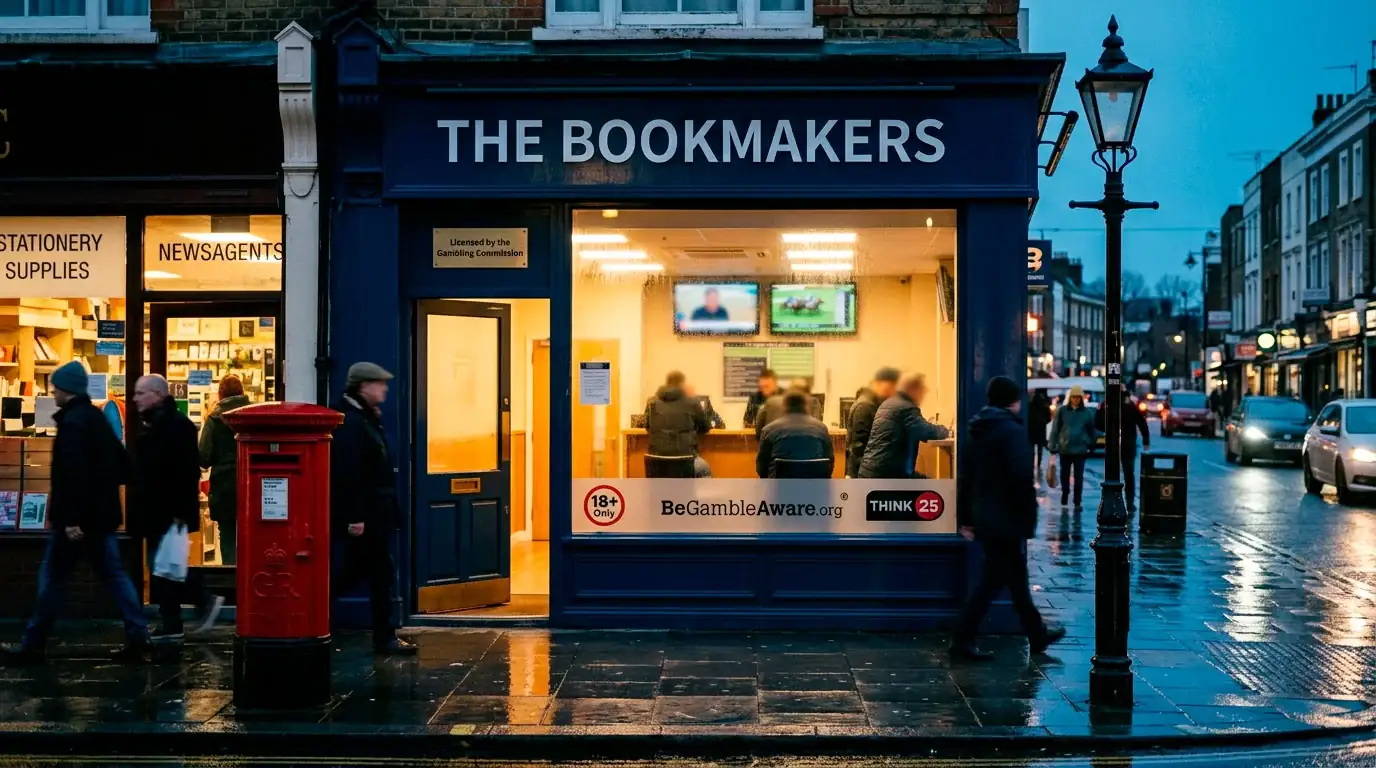
Affordability checks — the operator-side process of verifying that a customer can afford the amounts they stake — were introduced in phases. The aims were genuine: reduce gambling harm, catch problem play earlier. The effect on racing turnover has been sharp. Q1 2025 turnover on British racing was 9 percent below Q1 2024, with Core Fixtures down 14.4 percent and Premier Fixtures flat. The HBLB-tracked average turnover per race was 8 percent down in 2024-25 against the year before, 15 percent down on 2022-23, and 19 percent down on 2021-22. Four years, nearly a fifth of typical race turnover — gone.
Former Jockey Club chief executive Nevin Truesdale put the industry side bluntly: affordability checks do not work, do not address the underlying problem, and drag people into the unregulated market — which is part of the reason online turnover has seen a significant reduction. Separately he argued that the Gambling Commission “seems to want to reduce gambling to just small-stakes gamblers and that can’t be right,” calling the regime an infringement on personal freedoms while acknowledging that problem gambling needs to be kept in proportion.
10 percent of racing punters already bet through the unlicensed market, according to the BHA’s Right to Bet survey. Among high-stake punters — those staking £1,000 or more per transaction — Racing Post’s Big Punting Survey found one in three had used a non-regulated site in the previous 12 months. Unlicensed operators booked £379 million in net profit in the first half of 2025 alone, with the black market controlling around 9 percent of the entire UK betting market by Yield Sec’s estimate. A free bet only protects you if it comes from a licensed operator. At an unlicensed site, the token is not a promotion — it is a loss leader on a con.
What the safety gap looks like in practice
The practical check is the one from the UKGC section: licence number verified against the Register of Licensees. That is 60 seconds of work and the single highest-leverage decision you will make all year. A regulated free bet has enforcement behind it. An unregulated one has none.
The broader question — whether affordability checks are calibrated correctly, whether the Autumn 2025 Budget’s partial exemption for racing was enough — is being fought out above the punter’s head. What you can control is the side of the line your free bet is sitting on.
A working punter’s checklist for free bets in 2026
Seven years of this and I still have my pre-bet ritual pinned above my desk, scribbled on the back of an old Racing Post Weekender. The headline reads: “The best free bet is a free bet placed at the right price on the right race.” Everything below is an attempt to make that rule operational, because in the heat of a festival afternoon, with markets moving and tokens ticking towards expiry, the principle is not much use on its own.
The eight-point free bet checklist
- UKGC licence number — verified against the Register of Licensees.
- Best Odds Guaranteed — fires from morning odds, not just SP. Check the cut-off.
- Extra Places — which races today carry the promo, and at how many places.
- Non-Runner No Bet — applies to ante-post, verified race by race.
- Minimum field size — 16 runners for 4 places. Below that, place terms shrink fast.
- Race start punctuality — 87.6 percent of races in Q1 2025 went off inside two minutes of schedule, up from 79.2 percent in 2024 and 72.7 percent in 2023. Reliable start times signal reliable settlement.
- Horses in training — 21,728 at the last count, down 2.3 percent year on year. Thinner population means fewer competitive handicaps.
- Average field size — 11.02 runners on the flat, 9.41 over jumps at Premier Fixtures. Below these, place terms lose their teeth.
Building habits around each-way and ante-post
The each-way bet — stake split between win and place on the same horse — is the classic vehicle for a festival SNR token, because the place portion carries you through near-misses that would otherwise wipe the token. Terms vary by field size, and the place fraction moves between 1/4 and 1/5. For the full mechanics, the each-way horse racing betting guide for the UK walks through every permutation.
Ante-post is the other. Most welcome offers exclude it from the qualifying bet. Past the welcome stage, though, ante-post markets with NRNB applied can be a reasonable place to park a free bet — without NRNB you are exposed to non-runners, and on a Grand National ante-post book where dropouts are routine, that exposure is material.
The best free bet is a free bet placed at the right price on the right race — where the operator is licensed, the promo is verified, the field is big enough for place terms to matter, and the expiry gives you time to find the right market rather than the first one available.
Questions I get asked every week
What is a free bet in UK horse racing betting?
A free bet is a token — almost always stake-not-returned — issued by a licensed bookmaker as part of a welcome offer, a reload promotion or a reward. Only the profit is paid if the bet wins; the face value of the token is not added to the settlement. A £10 SNR token at 5.0 returns £40, not £50. Free bets are subject to terms — minimum odds, expiry, market exclusions — and on UK racing they are a fixed-odds product, not usable on the Betfair Exchange or Tote pools in the vast majority of cases.
How does a “Bet £10 Get £30” welcome offer actually work?
The mechanic is a qualifying-bet trigger. You deposit, place a £10 qualifying bet at minimum odds of usually 1.5, and when that bet settles you receive £30 in free bet tokens, typically split into three £10 SNR tokens. Expiry runs 7 to 30 days, market exclusions usually rule out virtual racing and Tote pools, and payment-method exclusions sometimes lock out Skrill and Neteller deposits. The advertised “£30” is roughly £18 to £25 in realistic value depending on the prices you pick.
What is Best Odds Guaranteed and is it worth using with free bets?
Best Odds Guaranteed means that if the price you took at bet placement is shorter than the Starting Price, the bookmaker pays at the bigger of the two. It applies to single win and each-way bets on UK and Irish racing, usually from a morning cut-off. Interaction with free bets is operator-specific — many books apply BOG to token profit, some do not apply it to tokens at all. Where it does apply, it is meaningfully valuable. bet365 paid out more than £50 million in BOG enhancements across Cheltenham 2026 alone.
How does an each-way bet work, and can I use a free bet each-way?
An each-way bet is two equal-stake bets: one to win, one to place. A £10 each-way bet is £20 in total. The place portion pays at a fraction of the win odds (typically 1/4 or 1/5) if your horse finishes inside the paying places. For handicaps with 16 or more runners, the standard is 4 places at 1/4 odds; Extra Places promos stretch this to 5, 6, 7 or 8. Most SNR tokens can be used each-way, but the token usually covers only the win portion, with the place portion topped up in cash.
What does Non-Runner No Bet mean and when does it apply?
Non-Runner No Bet applies to specific ante-post markets — races where you bet days, weeks or months ahead. When NRNB is active, if your horse does not line up, your stake is returned rather than lost. Without NRNB, a non-runner on ante-post is a dead stake. Operators typically apply it to high-profile races — the Grand National, the Cheltenham Gold Cup, the Derby — from a defined date, often a few weeks out.
Can free bets be used on the Grand National, Cheltenham Festival or Royal Ascot?
In almost all cases, yes — and these festivals are where free bets deliver their strongest effective value. Extra Places, enhanced BOG and NRNB ante-post markets cluster around the three big festivals. Cheltenham 2026 is projected at £450 million in four-day turnover, the Grand National at roughly £250 million on a single race, and Sky Bet alone paid out more than £10 million in Extra Places during Cheltenham this year. The BHA has modelled a harmonised 21 percent Remote Betting and Gaming Duty as costing racing roughly £66 million a year and 2,752 jobs — which is why, as Grainne Hurst said of the Autumn 2025 Budget, “this exemption is cosmetic,” and the downstream effect on how operators fund promotions is still working through.
What the 2026 season asks of the thinking punter
The Horserace Betting Levy Board has set £77.1 million aside as funding for British racing in 2026 — including £4.4 million of additional prize money, ring-fenced. That is a solid platform in a year when plenty of other moving parts are not. The Budget has reshaped the tax landscape, affordability checks continue to ripple through turnover, the black market keeps pulling at the edges, and Levy yield is still climbing in the face of all of it. You do not need to track every tremor. You need the fundamentals right.
The fundamentals are what the numbers keep pointing at. Bet inside the regulated market. Verify licences the hard way. Understand what stake-not-returned means before you accept a “free” £30. Deploy tokens on big fields at fair prices, lean into Extra Places and BOG when the calendar cooperates, treat the welcome offer as a five-gate product rather than a gift. UK free horse racing betting in 2026 is a better proposition than its detractors suggest — and a less generous one than its advertisers imply. The difference between those two realities is the reader who has made it to the end.
The cluster guides go deeper on the pieces this playbook only outlined: the welcome offer mechanics, each-way in full, Grand National free bets, the bookmaker landscape and the exchange alternative.
Created by the ”Free Horse Racing Betting” editorial team.